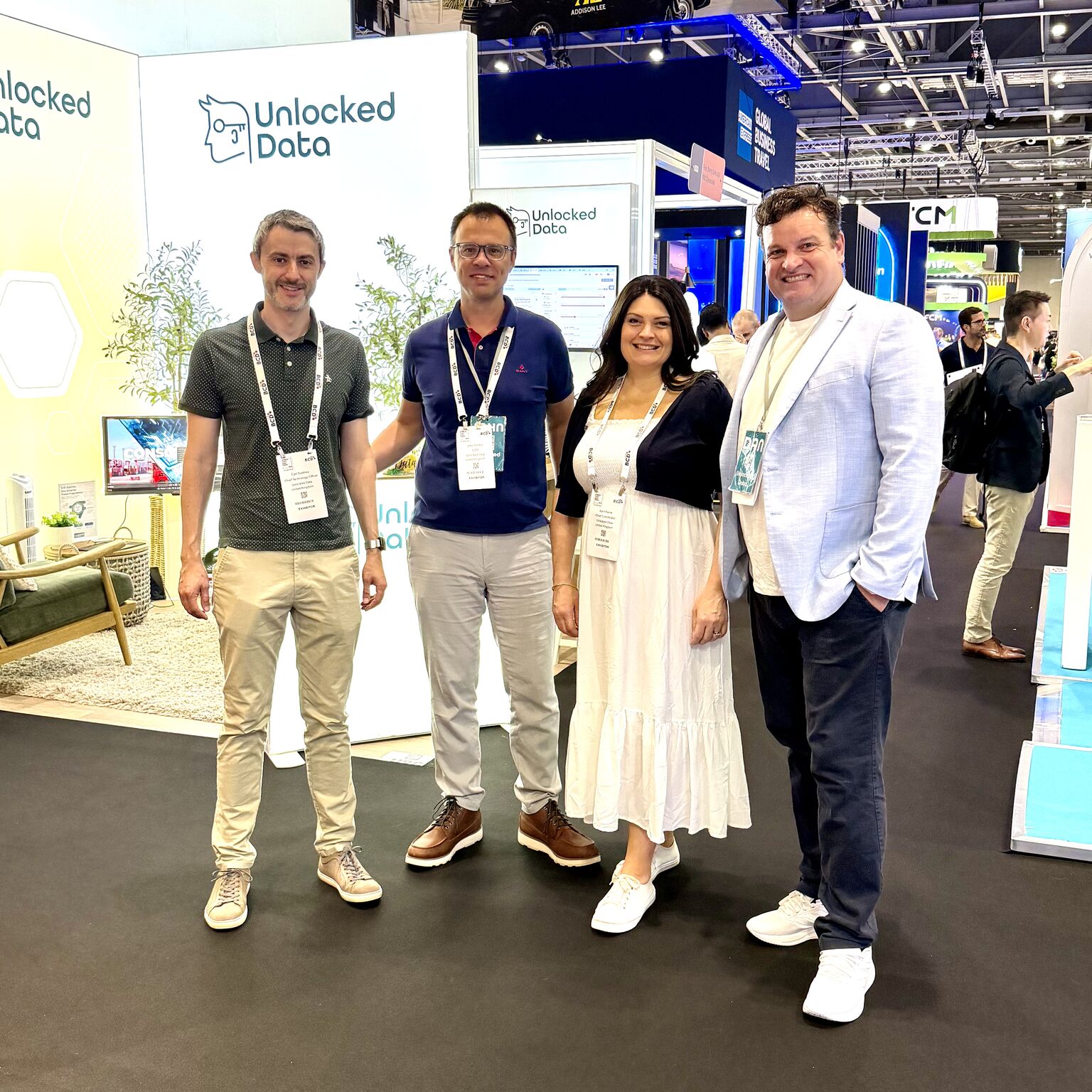
As the business travel industry heads into another busy event season, with Business Travel Show Europe, Business Travel Show Americas, and GBTA Europe all taking place within a matter of months, it's the perfect time to reflect on the key themes that we find are shaping the conversation.
After spending two days speaking with travel managers, technology providers, and industry leaders at Business Travel Show Europe 2026 in London, several clear themes emerged. While AI continues to dominate headlines, the conversations on the exhibition floor suggested that the industry's priorities are becoming more nuanced.
Here are the five biggest takeaways.
1. Data is the product
One of the most striking observations from this year's show was just how many organisations now position data as their primary offering.
Out of approximately 200 exhibitors we would estimate that maybe 30 companies were focused almost entirely on data not simply as a feature of their platform, but as the core of their business.
The range was impressive and the travel technology ecosystem continues to mature, and with that comes increasing specialisation. Rather than broad, all-in-one platforms, we're seeing more organisations solving very specific data challenges exceptionally well.
As a team of data nerds, it was interesting to see the new ways people are using data products and be reminded of the unique ways in which Unlocked Data is already able to provide real insight and value for our customers.
2. AI is everywhere… yet surprisingly absent from conversations
Perhaps the biggest surprise wasn't the amount of AI on display but how little people actually talked about it.
Despite exhibitors investing heavily in AI messaging, many conversations with travel buyers centred on operational challenges rather than artificial intelligence itself.
This raises an interesting question:
Has AI moved beyond being a unique selling point and become an expected capability?
Rather than asking whether a platform uses AI, buyers increasingly appear to assume it does. The conversation is shifting back from "Do you use AI?" to "Can you solve my problem?"
Interestingly, research released during the show highlighted a credibility gap. Nearly half of corporate travel buyers cited geopolitical instability as one of their biggest concerns, yet only a small proportion of suppliers are currently using AI to help manage those risks. Organisations remain cautious about relying on AI where the consequences of getting it wrong are significant.
That's why we have always maintained an AI powered approach, with human input to add our own expertise and logic to all of the insights.
3. There's room to grow
Programme scoring results released during the event by CTM suggested that many organisations still rate themselves relatively low on programme maturity.
The rating scale included:
- Level 1: Reactive
- Level 2: Controlled
- Level 3: Optimised
- Level 4: Strategic
- Level 5: Intelligent
Out of 300 survey participants, most sat around a level 2, when we anticipated more to be at a maturity level of around a level 4.
While technology continues to evolve rapidly, many travel programmes are still using data primarily for reporting. It shows that we have a lot of work to do and also a significant opportunity here; how do you change data from just a control mechanism to something that actively drives decisions and informs strategy.
The technology to achieve this has never been more accessible. The challenge is ensuring organisations have the right data foundations in place first.
4. The most innovative AI isn't customer-facing
The innovation awards at the show highlighted another important shift.
Rather than showcasing AI as a chatbot or flashy interface, many of the winning solutions focused on using AI behind the scenes to automate complex workflows.
Whether streamlining booking processes or simplifying venue sourcing and negotiation, the emphasis was on making existing processes smarter, not replacing them.
This feels like the next phase of AI adoption.
The most valuable AI may not be the part users interact with directly. Instead, it will quietly connect systems, automate repetitive work, and improve efficiency in ways that simply make the experience better.
5. Leakage remains one of the industry's biggest challenges
Perhaps the most consistent topic raised during conversations with travel managers and on our follow up Data Therapy webinar about the event was leakage.
Despite years of discussion across the industry, organisations continue to struggle with travellers booking outside approved channels.
The consequences go well beyond missed savings. Travel managers highlighted challenges including:
- Limited visibility of total supplier spend
- Difficulty accessing expense data from finance teams
- Reduced ability to negotiate supplier agreements
- Incomplete programme reporting
- Increased duty of care risks
One particularly important point emerged during the discussions: if employees book outside managed channels, organisations may not know where their travellers are during an emergency. This isn't just a procurement problem but a safety issue.
The focus needs to be on education, visibility and making managed programmes easier to use.
Looking Ahead to GBTA
If Business Travel Show Europe is any indication, the conversation at upcoming GBTA events is likely to evolve further.